 Tom Whitfield
Website Redesign Cost: What Should a Business Actually Pay?
What does a website redesign cost in 2026? Honest market bands for freelancers, agencies, templates and productised builds, plus the questions to ask.
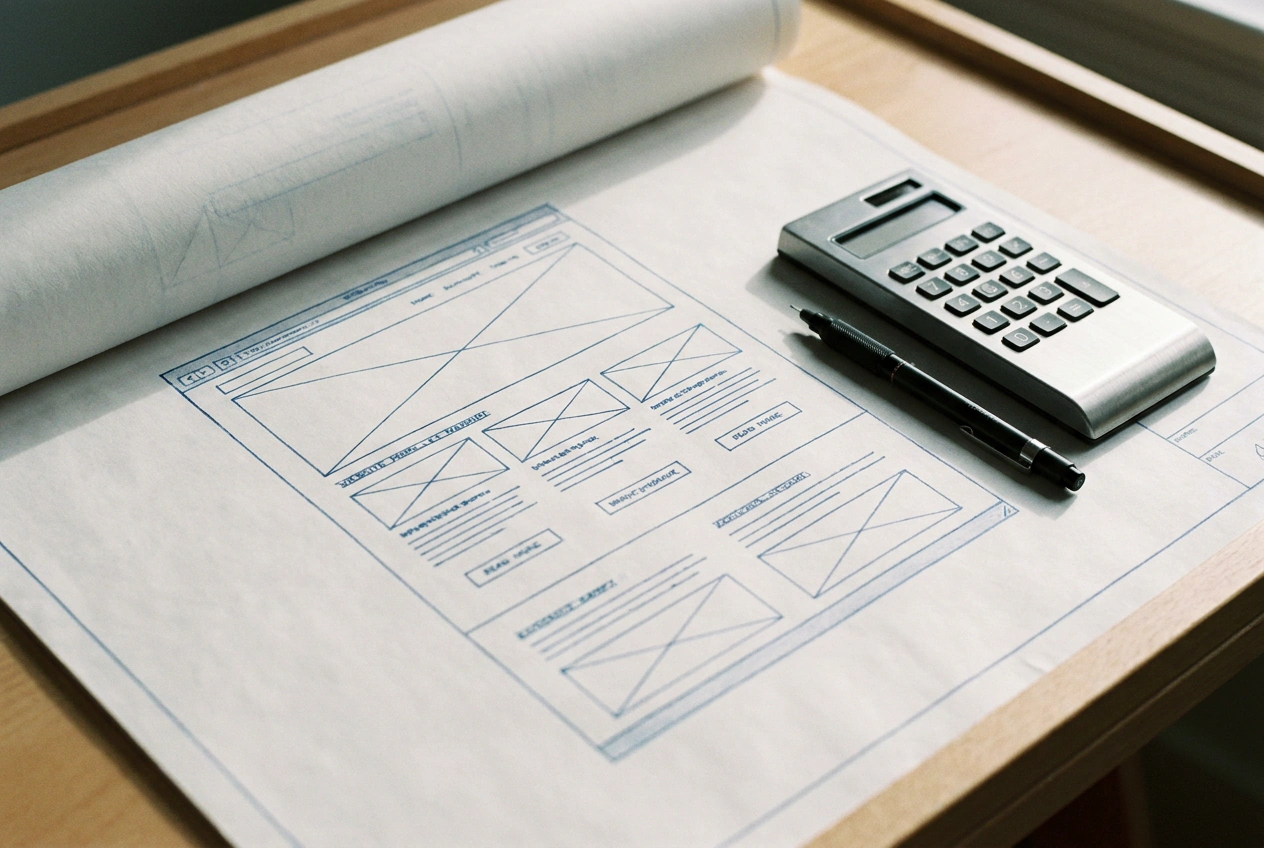
Ask five suppliers to quote for the same website and you will get five numbers separated by a factor of fifty. A freelancer might say £2,000. A large agency might say £80,000. Neither of them is lying. Website redesign cost depends on scope, process and, more than anything, the operating model of the company you hire. This guide maps the whole market honestly: what actually drives the price, what each type of supplier typically charges, and the questions that separate a fair quote from an expensive mistake.
One caveat before the numbers. Every figure below is a typical market band, not a rate card. Prices shift with country, sector and how complicated your website genuinely is. Use the bands to sanity-check quotes, not to beat suppliers over the head. And if you are not yet certain a redesign is justified at all, start with our guide to how often you should redesign your website. The cheapest redesign is the one you do not need.
What determines website redesign cost
Before comparing suppliers, understand what they are actually pricing. Almost every quote is built from the same seven ingredients:
- Unique templates, not pages. Fifty blog posts that share one layout are cheap. Ten pages that each need a bespoke design are not. Suppliers price templates; clients count pages. This mismatch causes most quote confusion.
- Custom design versus template. Original design from a blank canvas costs several times more than customising a proven layout. Both are legitimate: they solve different problems.
- Content. Who writes the copy, sources the photography and structures the pages? If the quote assumes you provide everything, the price looks smaller than the project actually is.
- Integrations. CRM connections, booking systems, payment flows, gated content and data migrations each add engineering days.
- SEO migration. Redirect mapping, metadata transfer and post-launch monitoring take real hours. Quotes that omit them are not cheaper; they are incomplete.
- Process overhead. Discovery workshops, stakeholder reviews and revision rounds all cost money. Some of that buys alignment; some of it buys meetings.
- The supplier’s operating model. The same five-page website costs wildly different amounts depending on whether it is built by one person, a boutique team or a hundred-person agency. That model is what the rest of this guide walks through.
Freelancer pricing
A competent freelance designer or developer typically quotes somewhere between £1,500 and £8,000 for a five-to-fifteen-page business website, with day rates commonly in the £200-£500 band. At the bottom of the range you get a template customised with your branding; towards the top you get genuinely custom design and development from an experienced specialist.
The economics are attractive because you pay for production, not overhead. The risks are concentration and breadth: one person carries the whole project, so holidays, illness and other clients become your problem, and very few individuals are equally strong at strategy, design, development, copy and SEO. If you hire a freelancer, be honest about which of those you will cover yourself.
Small-agency pricing
Boutique studios of roughly three to fifteen people typically quote between £8,000 and £30,000 for a business website redesign. You are paying for a team (designer, developer, project manager) plus a defined process: discovery, wireframes, design rounds, build, QA and launch support.
This band suits companies that need strategic input, not just production. The trade-offs are timeline and change friction: six to twelve weeks is normal, and anything you ask for outside the original scope is priced as extra. A good small agency is the default choice for a complex site with custom requirements. A mediocre one charges agency prices for template work. The questions at the end of this article are how you tell them apart.
Large-agency pricing
Established agencies with big teams, account layers and formal discovery phases typically start around £30,000 and run to £150,000 or beyond for enterprise engagements. The money buys user research, stakeholder workshops, bespoke design systems, accessibility and compliance work, and the capacity to handle procurement, legal review and multi-market rollouts.
For a large organisation replatforming hundreds of pages across regions, that overhead is the product. For a twenty-person company that needs a sharp marketing site, it is mostly ceremony you are subsidising. The band is not overpriced; it is priced for problems most businesses do not have.
Template-led builds
At the low end of the market sit template-led builds: a premium theme or website builder, configured with your logo, colours and copy, typically for £500-£3,000. Delivery in one to three weeks is realistic.
This is a rational choice for a brand-new business that needs a credible presence quickly. The compromises are sameness (your site will resemble everyone else’s on the same theme), performance bloat from unused theme features, and lock-in to whichever platform the builder chose. Treat it as a starting point, not a destination.
Productised website services
Between templates and agencies sits a newer operating model: the productised service. Fixed scope, fixed price, fixed timeline, usually somewhere in the £500-£5,000 band. Instead of scoping every project from scratch, the supplier runs one tightly-defined process again and again, which strips out discovery meetings, proposal cycles and scope negotiation.
Our own GYRODILE/48 is built on this model: five pages, redesigned and rebuilt for £799 fixed, delivered in 48 working hours. We can hit that price and speed because the scope never changes: same page count, same process, same sprint structure every time.
Be clear-eyed about what productised means, ours included. It is not the universal answer. If you need twenty bespoke templates, deep CRM integration or a multi-language estate, a productised sprint is the wrong tool and a proper agency engagement is worth the money. Productised services win when your requirement genuinely fits the fixed scope. Then you get agency-grade output at a fraction of agency process cost.
The market at a glance
| Route | Typical band | Typical timeline | Best fit |
|---|---|---|---|
| Template-led build | £500-£3,000 | 1-3 weeks | New businesses needing speed and credibility |
| Productised service | £500-£5,000 fixed | Days to 2 weeks | Defined scope, fast turnaround, no process overhead |
| Freelancer | £1,500-£8,000 | 3-8 weeks | Budget-conscious projects with internal strategy |
| Small agency | £8,000-£30,000 | 6-12 weeks | Custom builds needing a team and a process |
| Large agency | £30,000-£150,000+ | 3-9 months | Enterprise estates, compliance, multi-market |
The hidden line item: your existing traffic
The most expensive redesign is the one that quietly destroys your organic rankings. Redirects, metadata transfer and post-launch monitoring belong in every quote, because recovering lost traffic is slow, uncertain work. Our Helpful Content Update case study shows what a structured recovery of 40% of lost traffic actually took. Paying to protect rankings is always cheaper than paying to win them back.
Copywriting and content costs
The single most common cause of stalled redesigns is the phrase “client to provide copy”. Professional web copywriting typically runs £150-£500 per page, and full-site messaging projects (positioning, page structure and copy together) commonly land between £1,000 and £5,000. Photography, illustration and video sit on top.
Budget for content deliberately, whichever route you choose. A beautifully designed page with placeholder-grade copy converts like a placeholder.
Hosting and platform fees
The build price is not the whole price. Recurring costs typically look like this: shared hosting at £5-£30 per month, managed WordPress hosting at £20-£100 per month, all-in-one builders such as Squarespace or Wix at £15-£40 per month, and ecommerce platforms from around £25 per month upwards before apps. Add the domain, business email, and any premium plugin or theme licences. None of these are large individually; together they are commonly £300-£1,500 a year, and quotes rarely mention them.
Maintenance costs
Websites decay. Software updates, security patches, backups, uptime monitoring and small content changes all need an owner. Care retainers typically run £50-£500 per month depending on how much change you expect. The alternative (nobody owning it) is how sites end up hacked, broken on mobile, or three years out of date, which is usually what triggered the redesign you are now pricing.
Questions to ask before accepting a quote
Whatever band you are buying in, these questions expose the difference between a complete quote and a low-looking one:
- How many unique templates does the price include, and what does an extra one cost?
- Who writes the copy, and if it is us, what happens to the timeline when we are late?
- Is the SEO migration (redirect map, metadata transfer, sitemap, post-launch monitoring) included, and who owns it?
- What exactly happens on launch day, and who is on hand if something breaks?
- How many revision rounds are included, and what does a change cost after sign-off?
- Who owns the design files, the code and the CMS? Can we leave with everything?
- Will our team be able to edit pages without a developer?
- What are the recurring costs (hosting, licences, maintenance) for the first year?
Then hold the winning proposal up against our website redesign checklist before you sign. If the proposal cannot account for the checks on that list, the quote is smaller than the project.
If you are currently weighing up quotes that all seem to describe different projects, send them to us and book twenty minutes. We will tell you what each one actually includes, and what it is missing.
So what should a business actually pay?
Whatever the smallest package that honestly covers your scope costs, including content, migration and the first year of running costs. For most small and mid-sized businesses that is a productised sprint or a freelancer; for complex custom builds it is a good small agency; for enterprise estates it is a large one. Pay for the operating model that matches your problem, not the biggest one you can afford.
Tom leads web builds and measurement at Gyrodile: redesigns that protect existing traffic, and dashboards that agree with the bank account.
More insights from the Gyrodile teamMore from the playbook
